

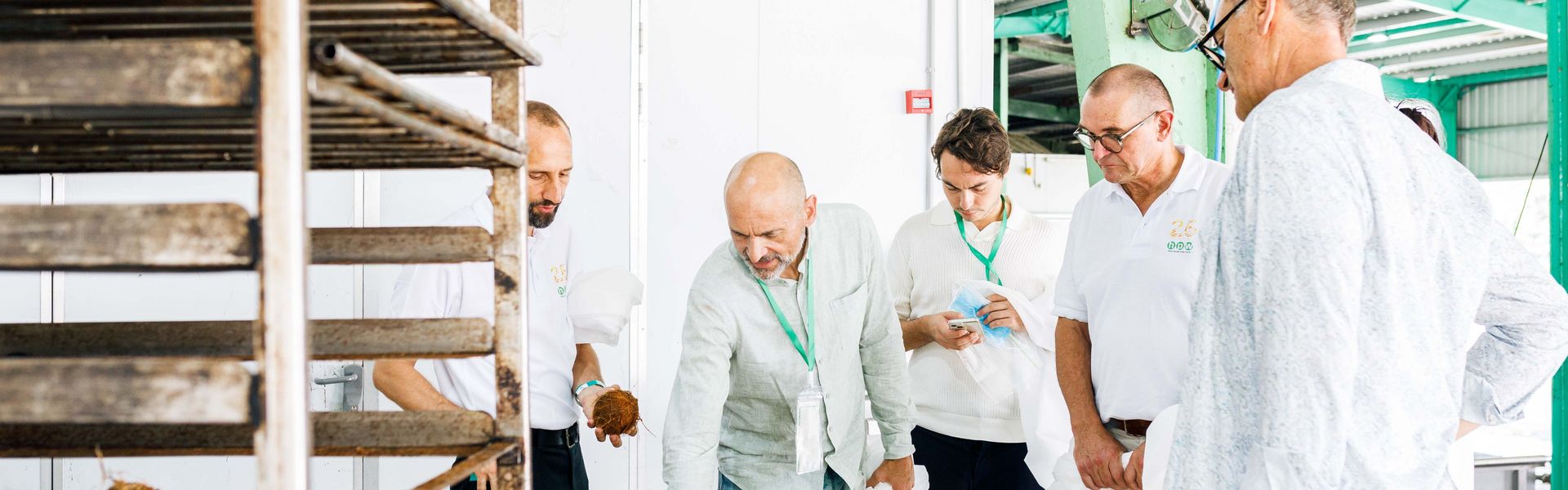
The Value of Processing at Source: Based on our lived experience.
For years, HPW exported fresh pineapples to Europe. Fairtrade certification ensured good prices on the European side. However, this was not enough to enable the farms to recoup their investments and keep pace with the competition in other parts of the world. Today, things are different.
For years, HPW exported fresh pineapple to Europe. Fairtrade certification meant strong prices on the European end. What we couldn't do was pass enough of that value back to the farms to cover what a farm needs to invest and keep track with the competitors in other parts of the world..
We understand that differently now. The factory that grew out of that export business processes more pineapple every year than we ever shipped fresh at the height of that trade. The price we pay farmers today lets them turn a profit and expand what they grow. Mango tells the same story. Our demand for fresh mango is high, stable, and ongoing, and that demand is a large part of why the West African mango industry is flourishing.
Fresh export alone was never going to get us there. Selling fresh pineapples and mango into Europe means competing directly with highly professional growers in South and Central America, who have decades of investment behind them in cultivation, in post-harvest handling, in buyer relationships built over years. Matching that through fresh export alone would take investment on a scale that business could never justify by itself.
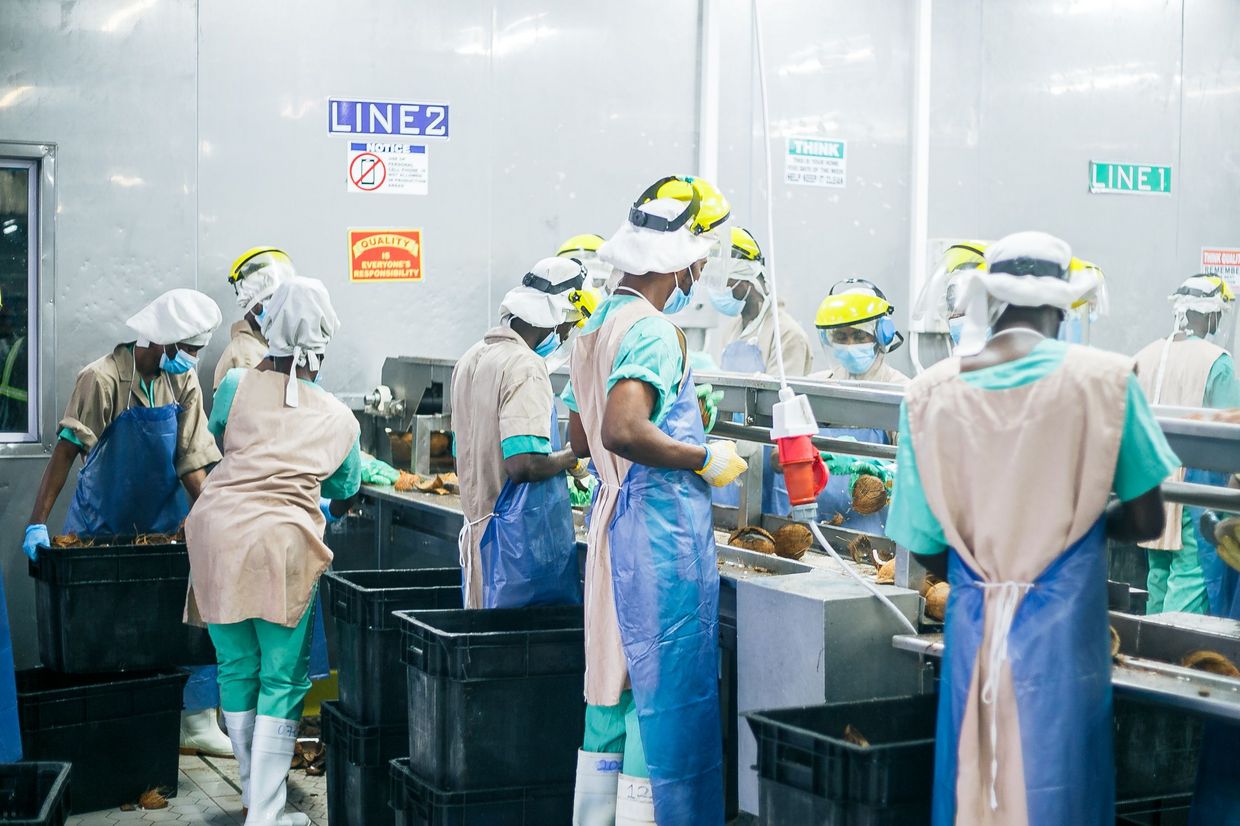
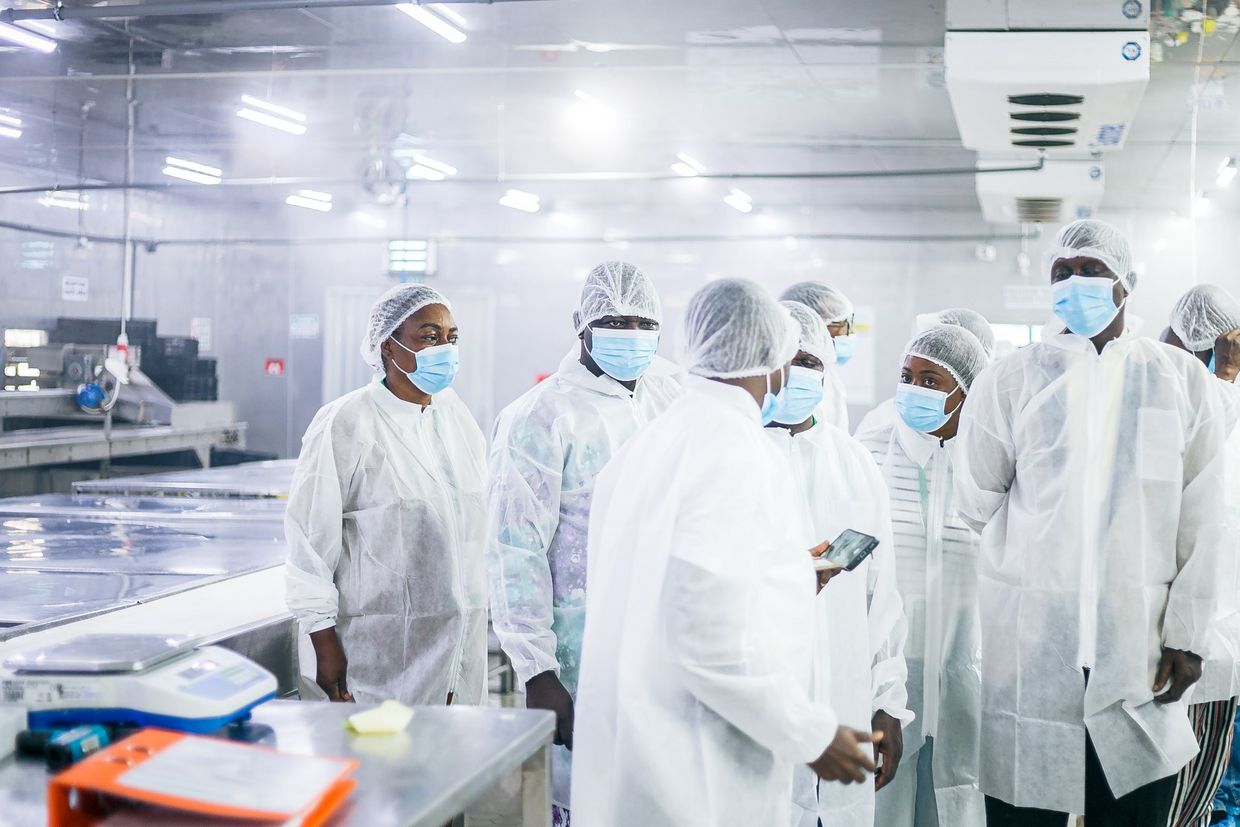
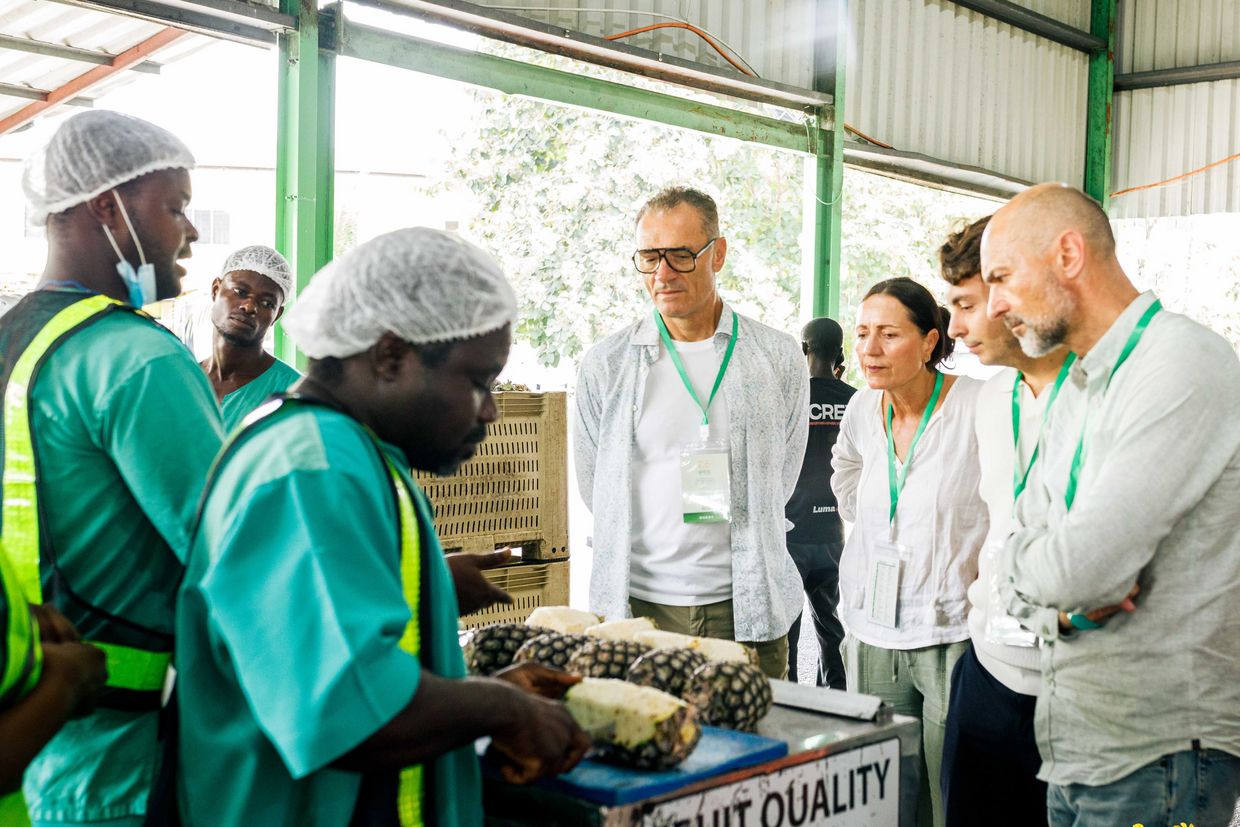
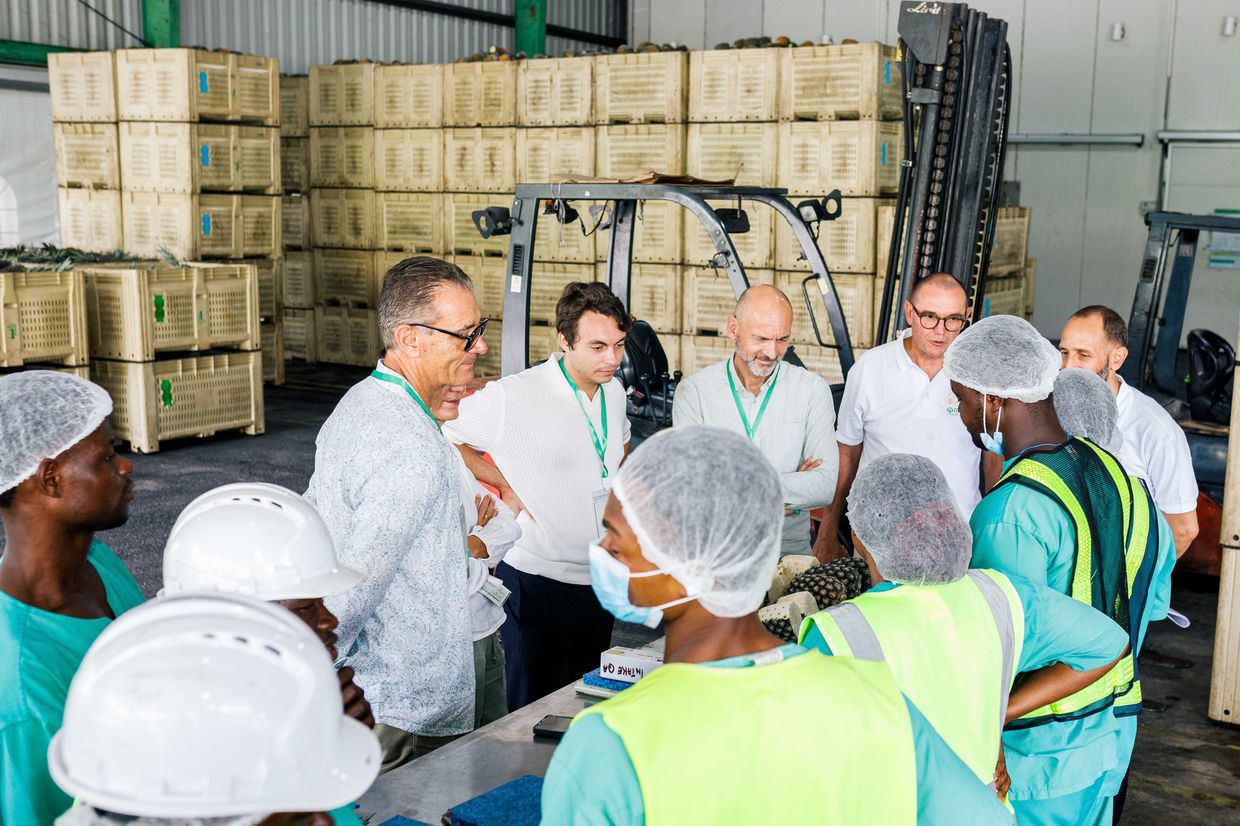
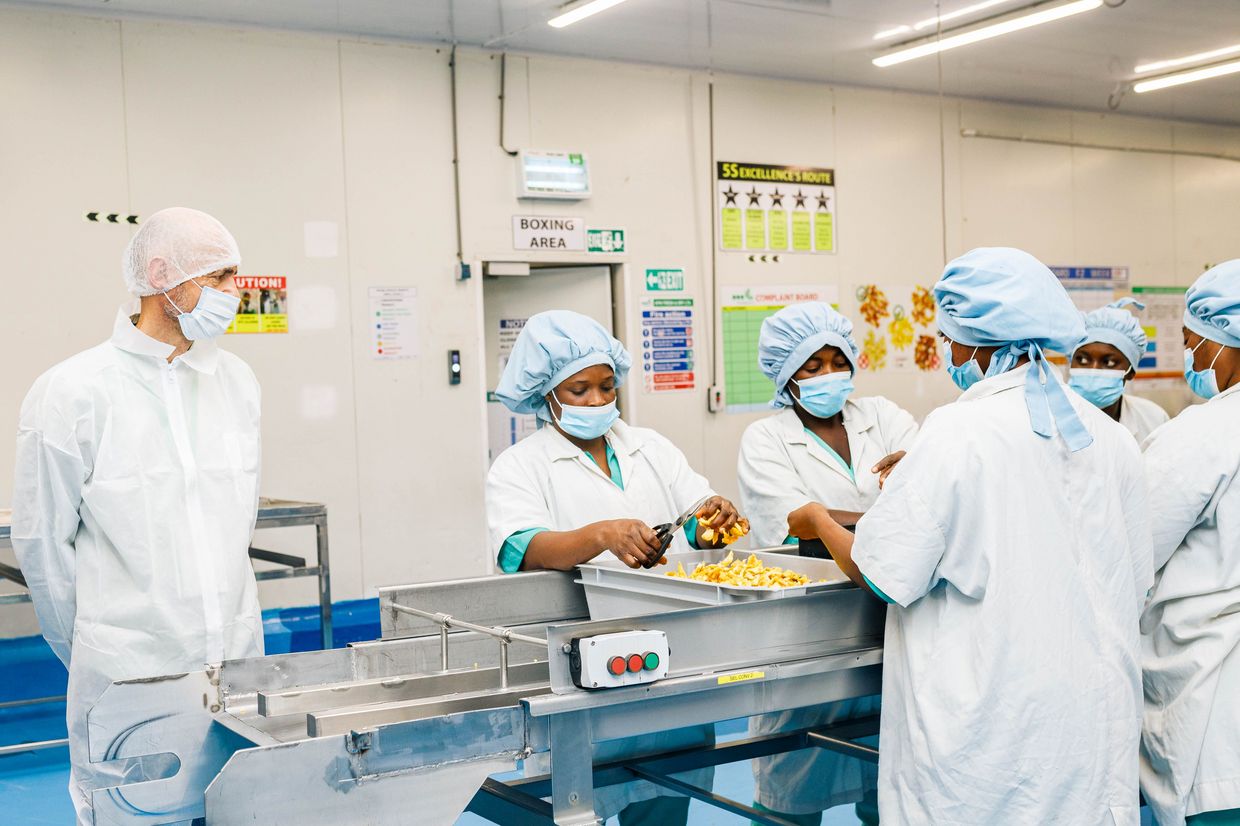
Processing at source changes the equation, and it opens the door to family managed farms. A grower's farm and their relationship with us as a processor develop side by side: steady, plannable for both, and generating far more value right where the fruit is grown, rather than value that shows up somewhere downstream where the farmer never sees it.
It also changes who gets hired locally and what they get trained to do. HPW employs around 2,000 people in Ghana. About 200 of them hold a qualified role: a university degree, an internal training programme, or a leadership position. That's a different profile of work than a business built purely around exporting raw fruit, where skilled roles are rare.
There's a third piece to processing at source: understanding the market you're selling into. A processor doesn't just move whatever a farm hands over. We notice when a customer changes a specification, when demand for a particular product shifts, when a competing origin moves on price, and we can adjust because the people running production talk to customers every week. That responsiveness is hard to build from further downstream, and customers notice when it's there.
None of this happened overnight. The shift from fresh export to processing at source took years of investment in the factory, in farmer relationships, in customer acquisition and care and in the people who run all as well..